My neighbour lost her house keys three times last year. Once at a wedding, once at the gym, and once — this is the best part — inside her own house, under a couch cushion. That’s roughly when she gave up on traditional locks and asked me to help her pick a smart door lock. This guide is basically the answer I gave her, cleaned up a bit.
If you’re on the fence about smart door locks in 2026, you’re not alone. Prices have dropped, the tech has matured, and Indian brands finally make locks that survive our monsoons and our dust. Let’s get into it.
What Makes a Smart Door Lock Actually “Smart” in 2026?
Quick answer: A smart door lock replaces your traditional key mechanism with digital authentication — fingerprint, PIN, RFID card, or a mobile app — and often adds remote monitoring, guest access codes, and auto-lock features, all controllable from your phone.
Honestly, “smart” gets thrown around loosely. Some locks are just a keypad bolted onto an old-school latch. Others genuinely rethink the whole door. The real difference in 2026 comes down to three things: how many ways you can unlock it, how it handles power failure, and whether the app actually works without lagging for ten seconds every time you open it.
I’ve tested locks where the fingerprint sensor took almost two seconds to register — annoying at 11 PM with grocery bags in both hands. Small delays like that matter more than spec sheets suggest.
Top Access Methods to Look For
Not every household needs every feature. A single professional living alone has very different needs than a joint family with kids, a maid, and weekend guests.
- Fingerprint access — fast, no codes to remember, though it can struggle with wet or dirty fingers (a real issue during Jaipur’s dust storms, trust me)
- PIN code entry — great backup, and perfect for giving temporary codes to a delivery person or maid that expire automatically
- RFID cards — convenient for elderly family members who find fingerprints or apps fiddly
- Mobile app control — lets you check if the door’s locked while you’re already at the office, panicking
- Auto-lock — the door locks itself a few seconds after closing, which honestly should be standard by now but isn’t
Best Smart Door Locks for Main Doors in India
If you want the short version: for most independent homes, a fingerprint-plus-PIN lock in the ₹15,000–₹25,000 range from an established brand hits the sweet spot between security and sanity.
Godrej’s Advantis smart lock range remains one of the safest bets here — the brand’s after-sales network across India is genuinely hard to beat, especially in Tier 2 cities where getting a technician for a lesser-known brand can take a week. Samsung’s digital door lock lineup is another strong option if you want a more premium, minimal look, though servicing can be slower outside major metros.
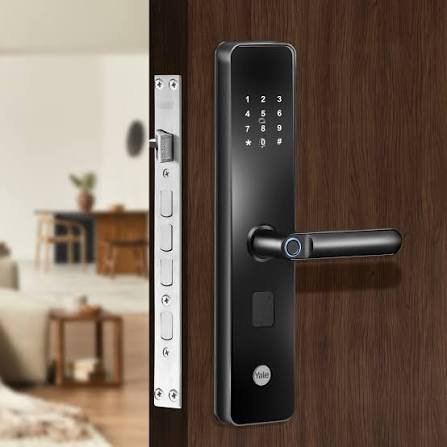
For those wanting fingerprint access without the premium price tag, Yale’s entry-level models and a few homegrown brands like LAVNA have gotten noticeably better over the last two years. I wouldn’t have said that in 2023.
Budget vs Premium: What You’re Actually Paying For
Quick answer: Budget smart locks (₹3,000–₹10,000) usually offer 2–3 unlock methods and basic Bluetooth. Premium ones (₹20,000+) add Wi-Fi connectivity, cameras, face recognition, and sturdier 5-bolt mechanisms built for high-traffic main doors.
Here’s roughly how the market breaks down right now:
- Under ₹10,000 — Entry-level, usually Bluetooth or keypad only. Fine for internal doors, storerooms, or a rental flat.
- ₹10,000–₹20,000 — The realistic sweet spot for most families. Fingerprint, PIN, and app control, decent build quality.
- ₹20,000–₹35,000 — Premium builds, sometimes with cameras or voice assistant integration, better suited to independent houses or villas.
- Above ₹35,000 — Face recognition, video doorbell integration, heavy-duty bolts. Overkill for most apartments, honestly, unless you’ve got specific security concerns.
I’ll admit my own bias here: I think most apartment dwellers overspend on this category. Unless you’re in a standalone house with an exposed main door, you don’t need the ₹35,000 lock with a built-in camera. Save that money for a good CCTV setup instead.
Battery Life and Power Backup — Don’t Skip This
This is the section people ignore until they’re locked out at 1 AM. Every decent smart lock should have some form of emergency power backup — usually a 9V battery port on the outside — so a dead internal battery doesn’t strand you outside your own house.
Look for:
- Battery life of at least 6–8 months on regular AA batteries
- A clear low-battery warning through the app, not just a beep you might miss
- An external 9V emergency port (this alone has saved me once)
- Mechanical key backup — yes, even smart locks should have one, for the day the electronics just refuse to cooperate
Installation and Door Compatibility
Picture this: you order a smart lock online, get it delivered, and then realise your door is 3 inches too narrow for the mounting plate. This happens more than you’d think with older Indian doors, especially wooden ones with non-standard sizing.
Before buying, measure your door thickness and check whether the lock needs a mortise cut or works with a rim-lock style fitting. Most smart door locks sold in India today are designed around standard door sizes, but older homes and heritage properties can be tricky. When in doubt, get a professional installer to inspect the door first — it’s usually a small extra cost that saves a return-and-refund headache later.
[link to related guide on smart home security devices here]
App Features That Actually Matter (and Ones That Don’t)
Quick answer: The app features worth prioritizing are remote lock/unlock, activity logs, and temporary guest codes. Skip locks whose apps require constant Wi-Fi just to open the door mechanically — that’s a design flaw, not a feature.
I genuinely love the activity log feature — being able to see exactly when your house help arrived and left gives real peace of mind, especially if you’re not home during the day. Guest codes that auto-expire are equally useful; no more worrying about an old plumber still having access months later.
What I don’t rate as highly: voice assistant integration. It sounds cool in a demo but in daily use, saying “Alexa, unlock the front door” out loud near your entrance is… not exactly a security best practice.
[link to related guide on home automation basics here]
Common Mistakes People Make When Buying Smart Locks
- Buying based on price alone and skipping brand service history — a lock that’s ₹3,000 cheaper isn’t worth it if there’s no technician within 200 km when it jams
- Ignoring the door’s weather exposure — an external door facing direct monsoon rain needs weatherproofing the lock spec sheet should mention explicitly
- Forgetting to check warranty terms on the fingerprint sensor specifically, since that’s usually the first part to degrade
- Assuming every smart lock works with every door type without confirming first
[link to related guide on burglary-proofing your home here]
Frequently Asked Questions
Are smart door locks safe from hacking? Reputable brands use encrypted communication and rotate access codes, making them harder to compromise than a basic key-copy job at the local hardware store. That said, no connected device is 100% immune, so stick with established brands and keep the firmware updated.
Do smart locks work during power cuts? Yes, mostly. They run on internal batteries, not mains electricity, so a power cut doesn’t disable them. Just keep an eye on battery percentage in the app.
Can I install a smart door lock myself? Some models are DIY-friendly with basic tools, but for main doors, I’d still recommend professional installation — a poorly fitted lock is a bigger risk than the ₹500–₹1,000 you’d save doing it yourself.
What happens if I lose my phone — am I locked out? No. Every good smart lock offers a backup method — fingerprint, PIN, RFID card, or a physical key — precisely for this scenario.
Is a smart lock worth it for a rented apartment? It can be, especially models that don’t require permanent modification to the door. Just check with your landlord first, and keep the original lock safe in case you move out.
How long do smart door locks typically last? With decent maintenance, most quality locks last 4–6 years before the mechanical components need replacing, though the electronics might need a battery change every 6–8 months.
Final Thoughts
Smart door locks in 2026 have genuinely reached a point where they’re practical, not just a novelty for tech enthusiasts. The trick is matching the lock to your actual door, your household’s habits, and your budget — not chasing the flashiest model in the store.
For most Indian homes, a mid-range fingerprint-and-PIN lock from a brand with solid local service will do more for your peace of mind than any premium camera-equipped option. My neighbour, by the way, went with a mid-range fingerprint lock. She hasn’t misplaced a key since — mostly because there isn’t one to lose anymore.
If you’re shopping this year, measure your door first, shortlist two or three brands with good service reach in your city, and read recent buyer reviews before finalizing anything. That’s the boring advice, but it’s the advice that actually works.