
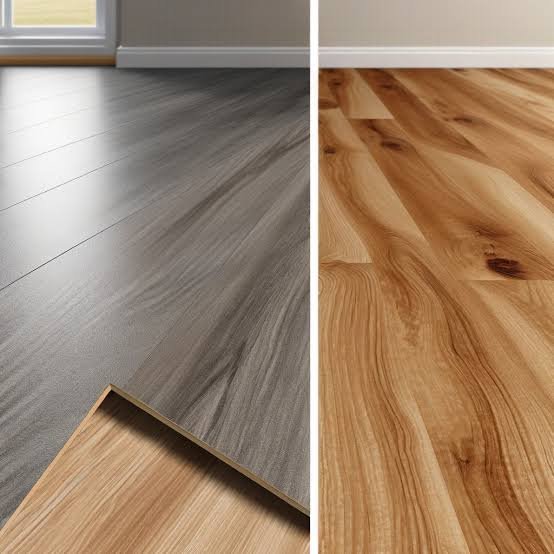
So you’re renovating, and somewhere between the paint samples and the tile catalogue, you hit the big question: hardwood vs laminate flooring. It’s one of those decisions that feels small until you’re three years in and either loving your floor or quietly resenting it every time you mop.
I’ve helped friends pick flooring for everything from a one-bedroom flat in Jaipur to a full villa renovation, and honestly, there’s no single “right” answer. It depends on your budget, your climate, and how much patience you have for maintenance. Let’s break it down properly.
What’s the Real Difference Between Hardwood and Laminate?
Hardwood flooring is solid wood, cut and finished from actual trees — oak, teak, walnut, whatever suits your taste and budget. Laminate, on the other hand, is a synthetic product: a photographic layer of wood printed on a fiberboard core, sealed with a protective coating on top.
That’s the core distinction, and it explains almost every difference you’ll read about below — price, feel, durability, resale value, all of it traces back to this one fact.
How Do They Actually Feel Underfoot?
Real wood has a certain warmth to it. You can feel the grain, the slight temperature difference, the way it creaks just a little with age (some people love this, some find it annoying). Laminate feels harder and cooler, more like walking on a very convincing photograph — because that’s essentially what it is.
Cost Comparison: What Will You Actually Spend?
In direct terms: laminate flooring in India typically runs ₹80–₹250 per sq ft, while solid hardwood flooring costs anywhere from ₹300 to ₹800+ per sq ft depending on the wood species. Installation charges add further to hardwood’s premium.
I’ll be blunt here — if budget is your primary concern, laminate wins by a wide margin. A 1,000 sq ft flat could easily cost you ₹2-3 lakh more in hardwood versus laminate, once you factor in installation and finishing. That’s not pocket change for most homeowners.
But cost isn’t the whole story. Cheap flooring that needs replacing in eight years isn’t actually cheap — it’s deferred expense.
Durability: Which One Survives Daily Life Better?
This is where opinions get heated, and I’ll admit mine is a bit unconventional. Everyone assumes hardwood is automatically tougher because it’s “real.” In practice, I’ve seen laminate hold up better in high-traffic homes with kids and pets, simply because its top layer resists scratches so well.
Hardwood, though, has one massive advantage: you can sand and refinish it. Got deep scratches after ten years? Refinish it and it looks new again. Laminate doesn’t offer that option — once the top layer wears through, you’re looking at replacement, not repair.
- Hardwood: scratches more easily but can be refinished multiple times over decades
- Laminate: scratch-resistant surface but no repair option once damaged
- Both: vulnerable to standing water, though laminate swells and warps faster
Maintenance: How Much Work Are You Signing Up For?
Picture a small business owner in Jaipur running a boutique with laminate flooring — she mops daily, wipes spills immediately, and five years in, it still looks presentable with zero fuss. That’s laminate’s biggest selling point. It just doesn’t demand much from you.
Hardwood needs more attention. You’re looking at periodic polishing, careful humidity control (especially relevant in India’s varying climates — Mumbai’s monsoon humidity is brutal on wood), and avoiding harsh cleaning chemicals that strip the finish.
Does Climate Actually Matter That Much?
Yes, more than people expect. Solid wood expands and contracts with humidity swings. In coastal cities or during peak monsoon, untreated hardwood can warp or develop gaps. Laminate is far more dimensionally stable, which honestly makes it the safer bet in humid regions [link to related guide on flooring for humid climates here].
Water and Moisture Resistance
Neither hardwood nor laminate handles standing water well, but laminate’s fiberboard core actually swells faster and more permanently than solid wood once soaked. For kitchens and bathrooms, both need water-resistant variants or you should consider tile instead.
If you’ve got a leaky pipe history in your building (we’ve all been there), this is worth thinking about seriously before committing to either option.
Resale Value and Aesthetic Appeal
Here’s something agents rarely say out loud: hardwood adds resale value in a way laminate simply doesn’t. Buyers perceive it as premium, permanent, a mark of a well-built home. Laminate, even the good stuff, gets mentally filed under “budget option” by most buyers touring a property.
That said, high-end laminate has come a long way by 2026 — some embossed textures are genuinely hard to distinguish from real wood at a glance. [link to guide on best laminate brands in India here] Does it fool everyone? No. Does it fool most casual visitors? Pretty much, yes.
Installation Time and Complexity
Laminate installs faster — usually a floating click-lock system that a decent contractor finishes in 2-3 days for an average flat. Hardwood installation, especially solid strip flooring nailed or glued down, can take a week or more and typically costs more in labour too.
Environmental Considerations
Hardwood, sourced responsibly, is a renewable material and often biodegradable at end of life. Laminate involves more synthetic components and is harder to recycle. If sustainability matters to you, this tips the scale toward wood — assuming it’s sustainably harvested, which is worth verifying with your supplier [link to sustainable sourcing guide here].
Alt text suggestions:
- “Close-up comparison of solid oak hardwood flooring texture versus laminate wood-look flooring”
- “Living room interior with hardwood flooring installed in a modern Indian home”
- “Contractor installing click-lock laminate flooring panels in an apartment”
FAQs: Hardwood vs Laminate Flooring
Is laminate flooring waterproof? Not fully. Most laminate is water-resistant, not waterproof — it can handle spills wiped up quickly but will swell if water sits on it for hours. Look for specifically labeled “waterproof laminate” if that’s a concern.
Which lasts longer, hardwood or laminate? Hardwood generally lasts longer overall — 25-100 years with proper care and refinishing — while laminate typically lasts 15-25 years before needing replacement.
Can I install hardwood or laminate over existing tiles? Laminate, yes, usually with an underlayment. Hardwood installation over tile is trickier and often needs a plywood subfloor first, adding cost.
Does laminate flooring increase home value like hardwood does? Not as much. Hardwood is generally seen as a value-adding upgrade by buyers and appraisers, while laminate is viewed more neutrally, sometimes as a cost-saving choice.
Is hardwood flooring worth it for a rental property? Usually not — the maintenance and upfront cost don’t make sense if you’re not living there long-term. Laminate is the more practical, budget-friendly choice for rentals.
What’s better for homes with pets? Laminate tends to handle pet claws better due to its scratch-resistant coating, though accidents (urine, water) can still cause swelling if not cleaned up quickly.
Conclusion
At the end of the day, hardwood vs laminate flooring really comes down to your priorities. Want long-term value, a premium feel, and don’t mind the upkeep? Go hardwood. Working with a tighter budget, want low-maintenance floors, and value practicality over prestige? Laminate is the smarter pick for most Indian homes in 2026.
Still on the fence? Walk into a couple of flooring showrooms near you, ask for sample boards of both, and live with them in your actual room lighting for a day or two before deciding — it makes a real difference once you see it at home rather than under showroom lights.